Barbara Brooks is not invisible
Up until that point, she hadn’t thought much about her age. It wasn’t part of how she moved through the world or how she understood her value. But as the rejections accumulated, it became clear that it was part of someone else’s calculation she could no longer control.
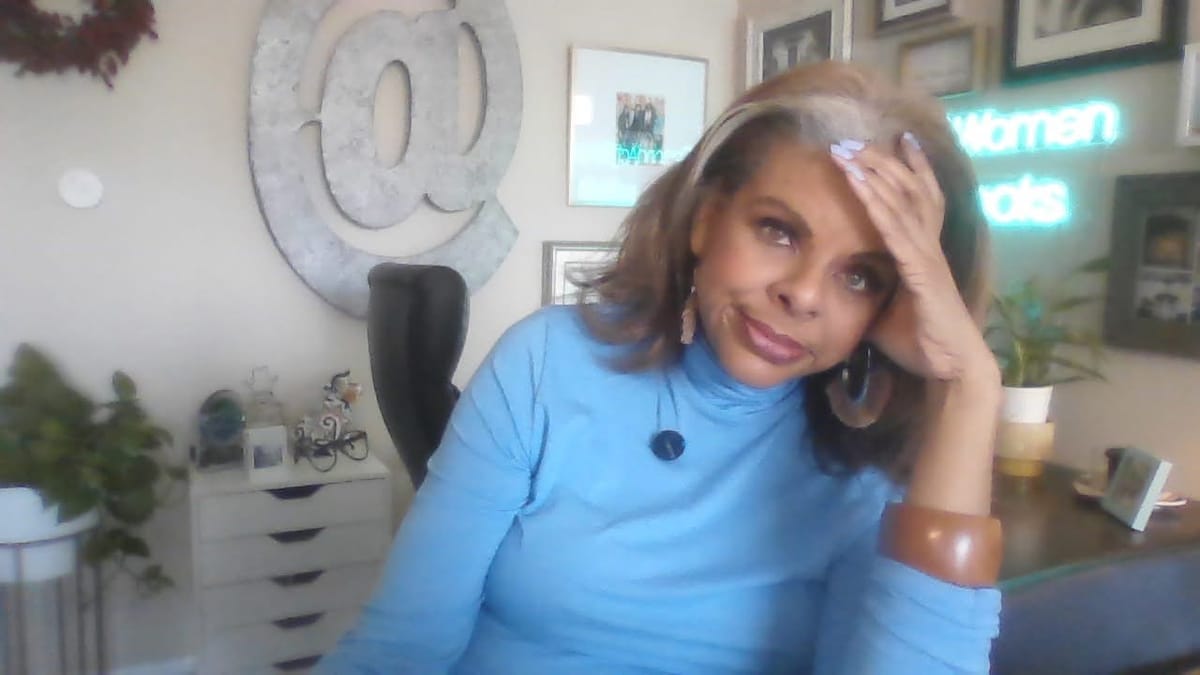
Accidental entrepreneurship sure looks good on her
It happened fast.
Barbara Brooks walked into a meeting as a senior marketing executive. She walked out without a job.
It’s an all too familiar story for a lot of women, She had built her career in marketing and public relations the way ambitious women often do, by becoming indispensable. She knew how to move a message, how to build momentum, how to deliver. She had a reputation for figuring things out and making things work. That reputation was earned over years of hard work.
“They were going to let me go, and I had no clue,” she told me. “And then it took me growing up at 50.”
She was let go without warning. “I can’t tell you how scared and unworthy I felt.”
The practical questions came first. What now? Who am I without this job?
She applied for jobs, showed up with the requisite experience and track record, and sat through conversations that seemed to go well enough but dissolved shortly after. The feedback, when it came at all, tended to circle the same polite language. She wasn’t quite the right fit, she might be overqualified, they were heading in a different direction. Yadyada.
“I was trying to find a job at 56,” she said. “I’d get ‘not a culture fit,’ ‘we’re going in another direction,’ and ‘overqualified.’ Ghosted through months of looking.”
Up until that point, she hadn’t thought much about her age. It wasn’t part of how she moved through the world or how she understood her value. But as the rejections accumulated, it became clear that it was part of someone else’s calculation she could no longer control.
“I kept thinking, this doesn’t make sense,” she said. “Something is off here.”
She didn’t set out to become an entrepreneur. There was no moment of revelation, no carefully constructed pivot. “I became this accidental entrepreneur,” she said.
Friends encouraged her to start something of her own. They pointed to her network, her experience, the obvious logic of it.
“I opened a marketing and PR firm,” she said. “The name was unique. Brooks Marketing Group. Whoa. Shocking.”
It was a continuation of what she already knew how to do, just without the structure of the system she had once been inside. And for a time, it worked. Clients came in, projects moved, and the work had some momentum.
“I’m getting more and more gigs because when you’re a certain age, you have a bank of contacts.”
But what she was building on the surface wasn’t the whole story.
“I kept hearing it over and over again,” she said. “Women saying, ‘I can’t get hired. I feel invisible.’”
It wasn’t one story, it was many stories. It became a recurring theme at Happy Hours in Cherry Creek. Different industries, different backgrounds, but the same underlying current. Women who had spent decades building careers finding themselves edged out of the very spaces they had helped shape.
And then, as she listened more closely, a clearer message emerged.
It wasn’t just women. It was women over 40.
“They felt unseen, unheard, and undervalued,” Brooks said.
Once she saw it, she couldn’t unsee it. So, she started bringing women together, not with some big sweeping grand strategy, but with a simple instinct to create space for something that clearly needed to exist.
“I started bringing women together and listening,” she said. “And what I realized was this was bigger than me.”
SecondActWomen, an event designed for women of a certain age, emerged from that realization.
It wasn’t all rainbows and bunny rabbits. The first event nearly didn’t happen. The sponsors had signed on, partners believed in it—but the audience wasn’t there yet. A week out, they had sold just 25 tickets.
“We were like, oh my God, what have we done,” she said.
They had already committed and the money was spent. Backing out wasn’t really an option.
“We changed the messaging. We moved the date. We just kept going.”
By the time the doors opened, 139 women showed up.
“They said it was the best conference they’d ever been to,” she said. “Not because of the speakers. Because they felt seen.”
It would be easy to draw a line from that moment forward, to suggest that everything that followed was a natural extension of that early success. It would also be untrue.
“There was burnout,” she said. “There was no salary. We were just trying to keep it going.”
The pace accelerated and the mission expanded faster than the structure could support it.
“I always say I was the cobbler with no shoes,” she said. “I was building for everyone else and not for myself.”
There were financial pressures, difficult decisions, and a partnership that ultimately dissolved. The kind of stretch that forces you to confront not just what you’re building, but how you’re building it.
Even when, again, she tried to return to a more stable path of employment, she found the same doors closed.
“At 56, I was still hearing it,” she said.
SecondActWomen has become a gathering point for women who have reached a similar conclusion. It’s an event and am nline movement with some pretty big name backers and thousands of engaged members. It’s a place where experience is not something to be minimized or explained away, but something to be used.
“We’re not done,” she said. “We’re just getting started.”
Barb is now on the public speaking circuit where she talks about what she’s learned on her path to “accidental entrepreneurship.” If you live in Denver and turn on the morning news, you’ll find her talking about SecondActWomen. She usually has her tiny dog, Ms Riley B, in tow. She's happy, she says, things turned out this way.
She talks about this phase of life differently now, not as a narrowing but as an expansion. She even has a name for it – Living Agefully.
“You’re not over the hill,” she said. “You’re on top of it.”
Barbara Brooks does not suffer fools.
Comments ()