Be so damn good they can’t ignore you
She is a woman in sports and media and branding, which means she has spent plenty of time in rooms where a man doing the exact same things would be called driven while she gets called “too much, too loud, too aggressive, too confident.”
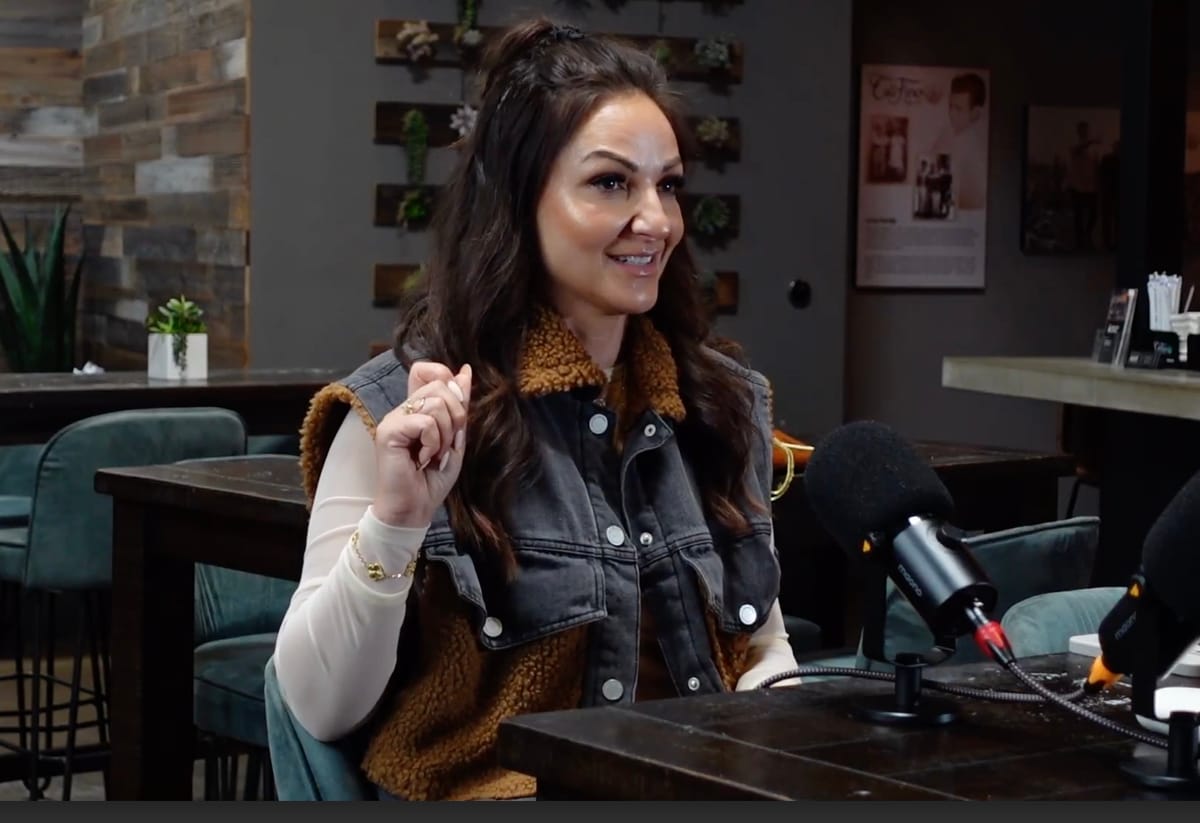
From Fairbanks to the front row of sports branding, Theresa Villano Reed built a career on nerve, story, and never waiting to be chosen.
Theresa Villano Reed came out of Fairbanks, Alaska, which already sounds a little mythic when you say it out loud. She likes to describe it as the top of the world, the northernmost McDonald’s, the northernmost Denny’s, a place without much polish.
Her parents were hippies. Her life now is not so much hippie as, let's call it glamorous. Somewhere between the cold, the sports, the hustle, and the long arc from varsity letters to red carpets, she built herself into the kind of woman who does not wait to be introduced to power. She walks into the room and claims it. And she is an absolute riot to interview. She's smart. She's sassy. She takes no bullshit from reporters.
“I was always the sixth man,” she says. “I made the team. I was there. I was in the mix. But I never really played.”
She took that experience and made a life out of refusing to disappear.
“The sixth-man mentality has been a theme in my life,” she says.
By the time she got to Oregon State on an academic scholarship, hanging around athletes, studying their energy, watching how they moved through the world, she had already started to understand something most people take years to name. Talent matters, yes. Access matters.
“I think there’s a certain energy about an athlete,” she says. “The competitiveness. I played big. And when a lot of the girls I played varsity sports with were way better than me, I was like, I’m going to prove to everyone that I can do this.”
She never became the athlete. She found a more interesting role, maybe even a more suitable role. She realized she could connect with athletes, understand their headspace, translate their ambition, and build around it. She could see the business and the story where other people saw plain old garden variety celebrity.
“I realized my ability to connect with athletes, I could monetize that.”
Today she works in PR, branding, marketing, storytelling, and strategy for athletes, sports figures, creators, and brands orbiting that world. But even that description doesn’t quite tell the full truth.
“It’s usually athletes that want more out of just playing football,” she says. “They want to build their brand beyond the game. A legacy.”
And legacy, in Theresa’s hands, is not just a slogan.
“Tell us your obstacles. Tell us what you’ve been through. Give us details, things we can’t Google. And that’s part of building their brand.”
She says this like someone who has learned the truth has more traction than the shiny gloss. The good athlete-brand manager doesn’t just slap a campaign over a face and call it good.
“I say, what are you missing?” she says of her process. “Instead of me saying, this is what I do, I know how to do it, I say, what are you missing?”
That may be her real genius, or at least one of them -- letting the athlete reveal the architecture of the thing, then helping build it.
There is, of course, another part to Theresa’s story. She is a woman in sports and media and branding, which means she has spent plenty of time in rooms where a man doing the exact same things would be called driven while she gets called “too much, too loud, too aggressive, too confident.”
“You’re so aggressive.”
“Thank you,” she says. “I’ve learned to advocate for myself clearly, even when it makes people uncomfortable.”
“You’re too loud.”
“Thank you. My voice is very powerful. I’ve worked very hard not to diminish it for others.”
“You’re so bossy.”
“Thank you. I’m unafraid to make decisions and be a leader.”
There is something almost delicious about the rhythm of that refusal, about her fearlessness.
She keeps a running list in her phone of the things men have said to her over the years.
“These hurt me,” she says. “But it’s going to motivate me.”
She is especially fierce about younger women learning these lessons earlier than she did.
“I want the little girls, the future generation of businesswomen, women in sports, women entrepreneurs, to bring something to the table,” she says. “Take seat. Have agency. Don’t wait to be invited to the table.”
And usefulness matters to her.
“Serve your community, serve your people,” she says. “You might’ve made a mistake, you can’t take it back. But what are you going to do?”
That instinct runs all the way through her work. She values relationship over performance. Her athletes trust her because she is not trying to manufacture a persona.
“Humans hire humans,” she says. “We are all doing the same thing.”
Her own career has evolved with the culture, which means she understands as clearly as anyone how much the athlete ecosystem has changed. Creators now sit in places once reserved for traditional reporters. Influencers are building reach and cultural capital that legacy outlets can’t ignore. Athletes are media channels, partners, personalities, ecosystems. She has adapted accordingly.
“The creators are a thing,” she says, laughing a little at the understatement of it. “The creators are getting invited to sporting events to promote instead of traditional marketing.”
Some people would say this has made the landscape messier. Theresa would probably say it has made it more honest.
Still, the part that stays with me a while after talking to Theresa is not the strategy brilliance, not really. It’s the force of her. Her confidence and presence, which is punctuated by an unusual if not disarming grace.
So we end the conversation and she flashes that smile, winks, and advises me and everyone else.
“Don’t dim your light for anyone.”
Her athletes trust her because she is not trying to manufacture a persona.
Comments ()