Scott Halford on leadership, clarity, the human brain, and how great founders learn to slow down and question assumptions.
A profile of bravery (and a fair amount of carpe diem)
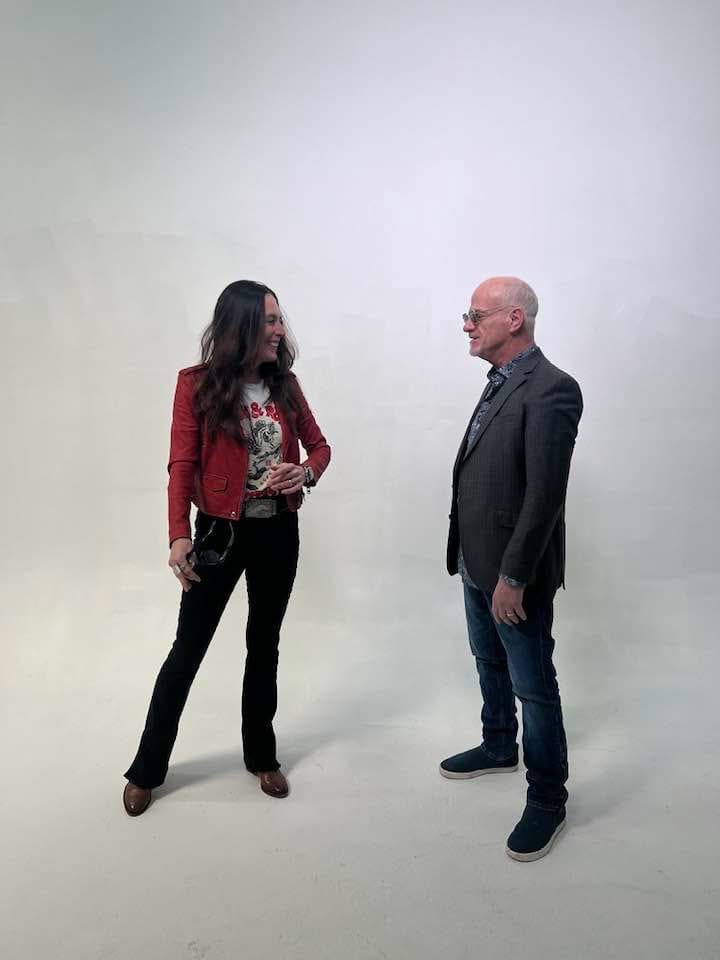
When Scott Halford came into the studio to record the podcast, I had to help him button his shirt. His hands don’t cooperate anymore.
He has a neurological disease similar to ALS, though not as severe and not fatal. That small moment said more about the last two years of his life than any introduction could, which makes this story harder to tell.
Scott Halford is an entrepreneur, keynote speaker, and author known for his work on leadership, emotional intelligence, and the science of human behavior under pressure. He is the Wall Street Journal bestselling author of Activate Your Brain: How Understanding Your Brain Can Improve Your Work—and Your Life and Be a Shortcut: The Secret Fast Track to Business Success. For more than three decades he has advised executives and spoken around the world about how people think, react, and perform when the stakes are high.
Full disclosure: I’ve known Scott for years. We’ve worked together and once spoke on stage together in Athens, Greece. But when he came into the studio that day, I didn’t interview him like a reporter. I was struck by his body's new limitations. I didn't know him like this. I didn't know how to be. So, in typical Scott style, he was the one who made me feel comfortable. That's what he does. He puts you at ease, he disarms your discomfort. Or something like that.
Scott’s life has never moved in straight lines. It zigzags, improvises, and occasionally breaks, which is, frankly, not a bad description of entrepreneurship.
“I’m a performer,” he tells me, correcting the label everyone else tends to use. Entrepreneur. Author. Speaker. Brain guy. Neuroscience translator to executives who would rather not think about their brains.
When I disagreed, he responded. “No, no. I’m a performer.”
He doesn’t mean it theatrically, of course. He means it practically.
“This business is strange,” he says, referring to his work as a speaker. “You have to be ready for anything and still look like you know what you’re doing.”
Before the speaking circuit and the non-stop international flights, Scott stumbled into television in Denver. A friend tipped him off about a job at Channel 9, so he interviewed without much expectation.
“They liked me because I wasn’t nervous,” he says. “Because I didn’t think I was going to get it.”
The station happened to hit a ratings milestone that day and bonuses were handed out around the newsroom.
“I just interviewed,” he laughs. “And they give me twenty bucks.”
He didn’t have the experience. They hired someone else first. Then they hired Scott anyway. When the news director asked how he handled pressure, Scott answered with a story.
He had been touring with Up With People, a ubiquitous musical in the aughts, in Albuquerque when the casting director walked up between acts and told him he would be opening the second half of the show.
Scott didn’t know the song. “He says to me, ‘You’ve got 15 minutes.’”
Fifteen minutes to learn it, sell it, and make it appear as though the whole thing had been planned from the beginning.
“That’s pressure,” Scott says. “That’s performance.”
The concept lodged in Scott’s brain and pushed him into a career as a speaker, but not a motivational speaker. He is emphatic about that.
His material has teeth, what he calls “neuro teeth.” Executives don’t want a feel-good, but forgettable speaker. They want results.
“I always vowed never to be that motivational guy,” he says. “I want people to leave changed.”
A system failure
In January 2023 Scott was flying to speak for the Ministry of Health in Saudi Arabia. He was connecting through London and standing in a slow security line when he suddenly realized he needed a bathroom. Security pointed upstairs. He stepped onto the escalator and the unthinkable.
“And I just couldn’t stop it,” he says. “I wet myself.”
He doesn’t soften the story. “For the first time in my life as a man, I was completely humiliated.”
The episode turned out to be the first sign that something was very wrong.
His body began failing him in quieter ways. Balance issues. Loss of function and an endless fatigue. He kept working anyway, adjusting his format because he could no longer safely stand on stage.
“I had programs where I couldn’t go up on the stage,” he says. “I had to stand in front.”
Then came Long Beach. A sales kickoff keynote.
“I couldn’t button my pants,” he says. “Couldn’t button my shirt. And I started sweating, thinking, how am I going to get dressed?”
He went downstairs early and asked the audio technician for help. “I said, ‘This is weird, but would you help me?’”
At the time Scott believed he had ALS.
“By March,” he says, “I thought 'my time is here.'”
Doctors eventually diagnosed CIDP, a neurological disorder that attacks the nerves. Treatment helped, but the disease forced him into a second career no one advertises: negotiating with insurance companies, coordinating doctors, and managing the logistics of staying alive.
“I became a walking laboratory for everything I write about,” he says. “Stress and what it does to your body.”
Illness didn’t just challenge his schedule. It exposed parts of his personality he hadn’t examined in years.
“When I don’t get what I need fast,” Scott admits, “I get cranky. Really cranky.”
He doesn’t excuse it. “It’s demanding. It’s unkind. It’s ugly.”
Then he remembers a sign his mother once taped to his bedroom door when he was a kid. A sort of reminder of his occasional less-than-sunny disposition
"I want what I want when I want it."
“I saw that person again,” he says. “And I didn’t like him.”
So he began paying attention to that version of himself instead of pretending it wasn’t there.
“I decided to get to know that guy,” he says. “Because if I don’t soften him, he’ll wreck things.”
Illness forced him to move differently and think differently. Some of the impatience remained, but other qualities surfaced alongside it—patience, perspective, and the kind of groundedness that arrives when the body reminds you it has final authority.
“I have to be,” he says. “Otherwise I fall.”
Resilience, in Scott’s world, looks less like heroism and more like administration.
At 64, he began asking himself a question every entrepreneur eventually confronts. “Am I going to retire, reset, or renovate?
“For the first time in over 30 years,” he says, “I canceled four engagements in a row.”
He took the summer off and wondered whether the phone would ever ring again. He changed how he spoke, how he moved, and how he acknowledged the obvious when audiences noticed the difference.
“If I drop something,” he tells the room, “the front row gets a prize. Otherwise you’ll see me break dance.”
At 64, he began asking himself a question every entrepreneur eventually confronts.
“Am I going to retire, reset, or renovate?”
Then he offers a warning younger founders would do well to hear.
“Don’t take your energy for granted. It pushes a lot of mediocre stuff into the world.”
Even the mundane details of life shifted. For the first time he filed his taxes late.
“The IRS,” he says, still amused, “was shockingly empathetic.”
When the conversation turns to authenticity, Scott becomes skeptical of the way the word is used in modern leadership circles.
“You can’t measure authenticity,” he says. “In science we look for universals, things that repeat.”
Then he shrugs.
“It’s like hygiene. I don’t know when you’re clean. But I know when you’re not.”
Authenticity, in Scott’s view, isn’t oversharing, it’s alignment. It's also a strung out concept at this point.
“Being yourself on purpose,” he says, “is one of the hardest things to do.”
Failure, he argues, is misunderstood.
“We learn from failure,” he says. “We learn what not to do.”
During that trip to Athens before illness struck, we skipped a group dinner and decided to sit under the Acropolis talking about life and the strange human habit of saving the good stuff for later. The expensive wine that he calls "The someday bottle."
I told him about the fire that burned my house to the ground. The trauma of the evacuation and the good wine we had been saving for years. Why didn’t we drink that wine, I asked Scott.
He answered in typical Scott fashion, “Oh darling, always drink the fucking wine.”
Brutally honest. Scott Halford on trust.

Comments ()