
Finnish designer Jenni Ahtiainen built Deafmetal after hearing loss began changing the way she moved through the world. What started at a workbench in Helsinki now reaches customers in more than 30 countries.
Jenni Ahtiainen does not look like anyone's idea of a hearing aid company founder. When we spoke, she was sitting in Helsinki several time zones away, her shaved silver hair catching the light as she laughed through a conversation about music, design, hearing loss, investors, and the future.
I first heard about Ahtiainen years ago in Copenhagen. She was, to put it mildly, already becoming a legend.
At the time, all I knew was that she was Finnish, worked in fashion and music, and had built a company called Deafmetal. Online, her image was part rock star and part fashionista. What you can’t see in the largely black and white collection of Jenni Ahtiainen imagery is that she is nearly deaf.
I asked her about it and she explained with ease that she knew she was losing her hearing long before doctors confirmed it – hearing loss ran in her family.
"I knew I was going to lose my hearing," she told me. "I've had bad hearing since I was 15 years old."
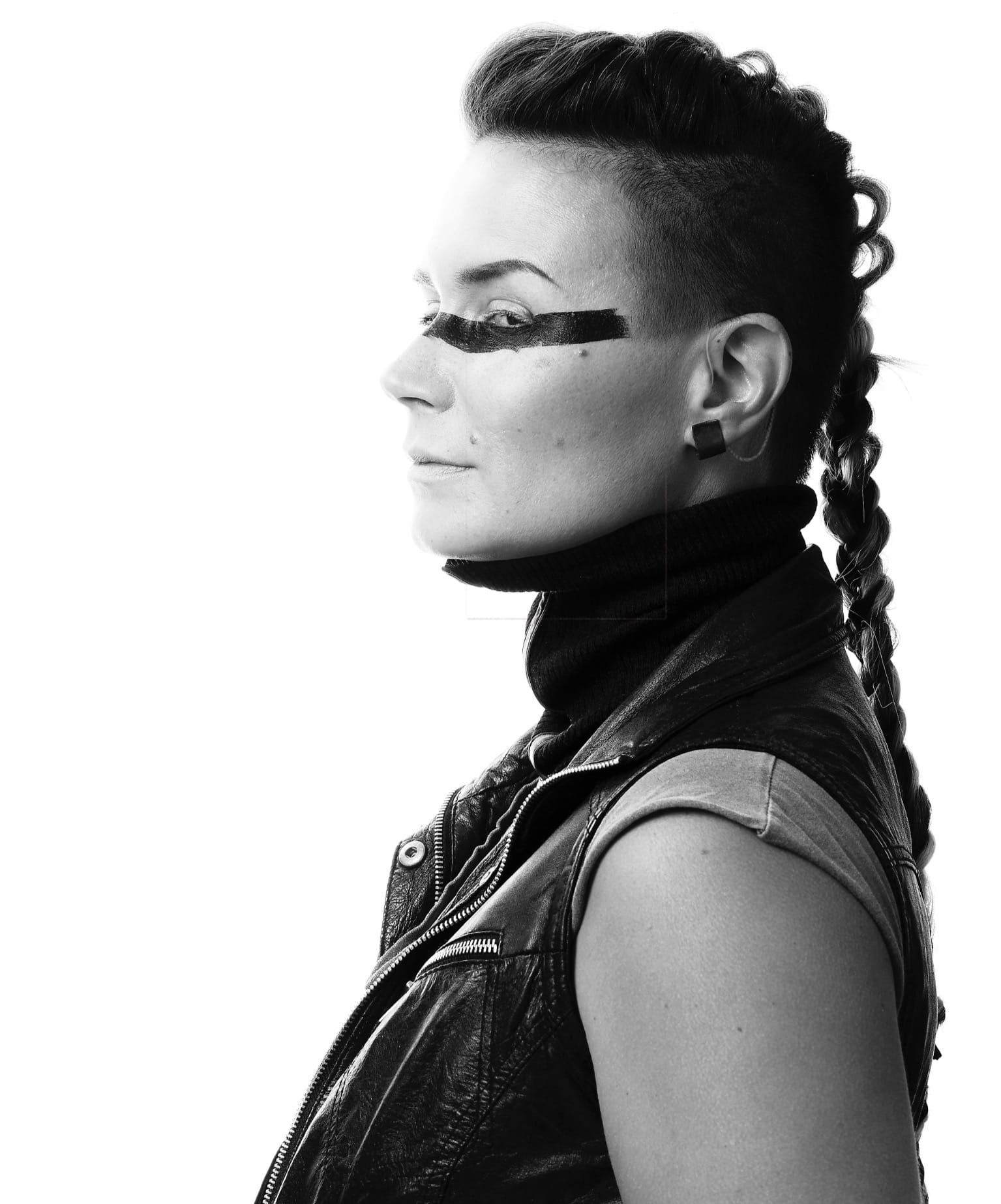
What she did not understand at the time was how much of her personality had already adapted around hearing loss. When she eventually started wearing hearing aids, old friends began sharing stories.
One former classmate admitted he had always assumed she was a little slow.
"He came to me and said, 'I always thought that you were a little stupid. I didn't know that you had bad hearing, and I didn't know either. I learned how to lip read," Ahtiainen said. "My whole identity started to shape around that bad hearing."
As her hearing continued to deteriorate, conversations became harder to navigate. Group settings demanded concentration. Events where she was expected to contribute became frustrating because she could no longer reliably hear what was happening around her.
"At one point I noticed that especially in some important events where I was supposed to talk and say my own opinion, I couldn't hear anymore."
The situation became impossible to ignore after a severe flu left her with a ruptured eardrum. She woke up one morning to find blood coming from her ear. The hearing in what had been her better ear deteriorated rapidly, and the diagnosis she had anticipated for years finally arrived. Hearing aids were no longer optional.
"They didn't suit me at all," she said. "I didn't feel like the woman that I was."
In her annoyance at the whole situation, she recalls sitting with her audiologist and making a promise. "I told my doctor that I'm going to make these rock."
And that’s exactly what she did.
Let’s workshop it
A few days later, she walked into her workshop, removed the hearing aids from behind her ears, and placed them on a table. Three minutes later, the first Deafmetal prototype was born.
"It's not just design," she said. "We do not sell jewelry. We sell attitude."
The company that emerged from that workshop now reaches customers in more than 30 countries. Its designs have appeared in museums, including London's Victoria and Albert Museum, and demand has grown far beyond what Ahtiainen imagined when she began experimenting at her workbench.
Jenni takes great pride in her customers and the role Deafmetal plays helping rebuild them navigate the world of hearing loss.
Jenni tells the story of one woman who wore her hair down for years because she didn't want anyone to see her hearing aids. After discovering Deafmetal, she pulled her hair back and walked into work without thinking twice about it.
Other customers describe similar experiences. They write about new-found confidence and visibility. They write about feeling like themselves again.
No longer invisible
For decades, hearing aids have occupied a strange place in popular culture. Millions of people wear them, yet they remain largely invisible.
"You can't see hearing aids anywhere," Ahtiainen told me. "You can see eyeglasses and you can see all those beautiful things, but you can't see hearing aids."
The question has led her toward a new project: an international exhibition featuring hearing aid users from different countries, cultures, and generations. The goal is simple: Show people what they rarely see reflected in fashion, media, and everyday life.
What began as a personal frustration has become a larger effort to challenge assumptions about aging, disability, and self-expression.
Today Deafmetal distributes through partners in the United States, Australia, and South Africa. Last Christmas, sales tripled over the previous year. The growth has created opportunities, but it has also created pressure.
"We are building the airplane while we're flying."
The company is growing quickly enough that Ahtiainen now spends as much time thinking about investors as design.
"Money is easy," she told me. "Money is also just a little bit dumb."
The right investor, in her view, brings knowledge, relationships, and perspective along with capital.
"The most important capital that I have is me," she said. "My energy. I'm doing all I can."
By the end of our conversation, it was clear that Deafmetal has become larger than the workshop where it began. It has changed Jenni and it has changed how hearing impaired people move through the world – no longer invisible.
"All the scars, all the differences we have, they are part of our personality," she said. "They are supposed to be cherished. Not hidden." -ACC
The story of Deafmetal in Jenni's words.


Comments ()