Living the Wahoo Way
Before Wahoo’s Fish Taco became a global brand, Wing Lam was handing out tacos to starving surfers in Costa Mesa parking lots.
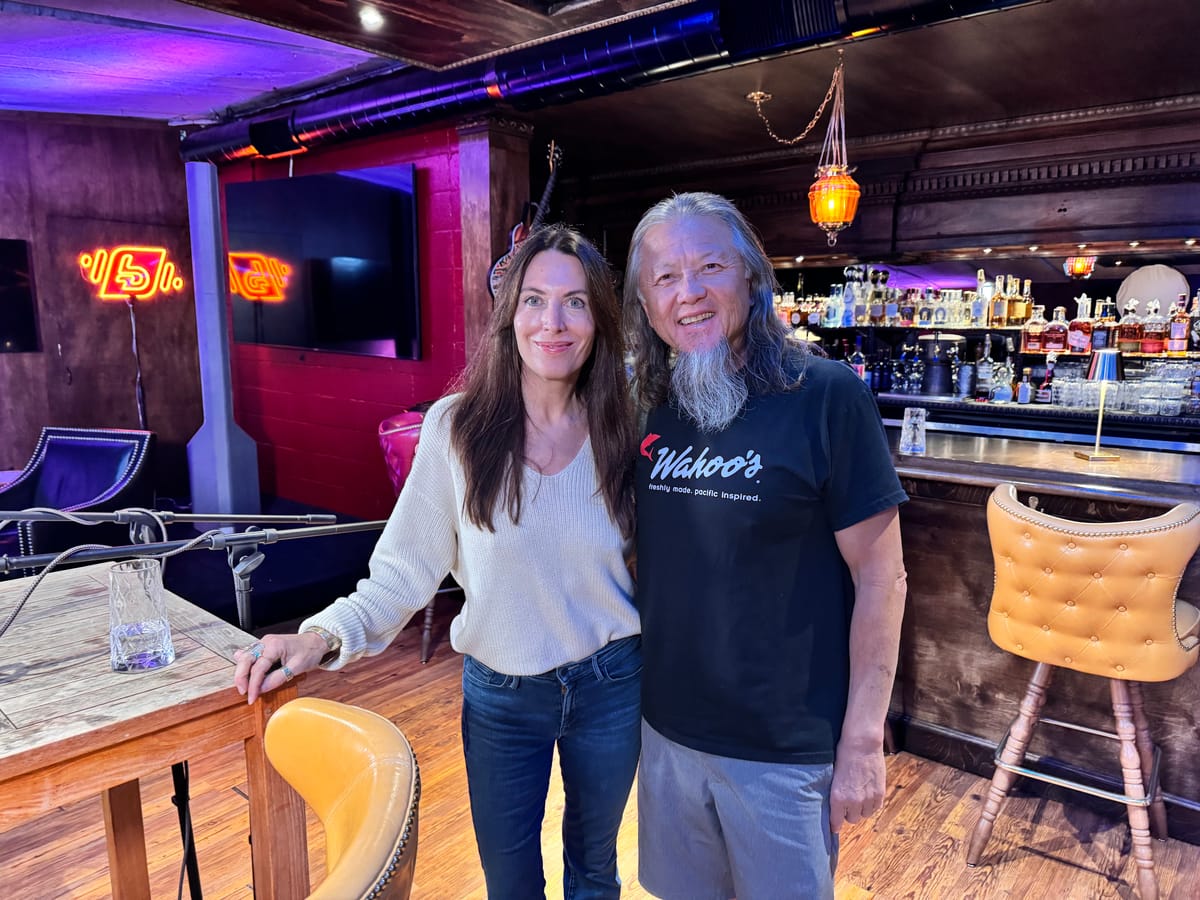
Wing Lam didn’t set out to build a restaurant empire. He just wanted to surf
By Amy Cosper
Wing Lam likes to joke that restaurants fail for a very simple reason.
“Ninety percent of restaurants fail in the first year,” Lam says. “Not because the food is bad. They fail because nobody shows up.”
It sounds obvious when he says it. But in 1988, when Lam and his brothers opened the first Wahoo’s in Costa Mesa, they weren’t thinking about restaurant theory or industry statistics. They were thinking about payroll. Rent. Whether anyone would walk through the door.
“We were doing okay,” Lam remembers. “But barely. I mean, we were just making payroll every Friday.”
Costa Mesa in the late eighties was becoming something unusual. Orange County was quietly turning into the center of the action sports universe. Surf companies were setting up offices. Skate culture was exploding. Snowboarding was still strange enough that many ski resorts refused to allow it.
Across the street from the first Wahoo’s sat Billabong.
“They asked me if I’d ever done catering,” Lam says. “Of course I said yes. Then I had to go figure out how to do it.”
The solution was simple. Lam set up a small taco stand in the parking lot. Nothing fancy. Just food, a folding table, and the willingness to show up.
From there things started to move.
“Another company would hear about it and say, ‘Hey, can you do something for us?’ Then another one. Quiksilver. All those guys,” he says.
None of those companies were particularly flush with cash in those days. The industry was young and most of the brands were still figuring out what they were becoming.
“So we started bartering,” Lam explains. “They’d give me T-shirts. Shorts. Whatever they had.”
Lam didn’t mind. The shirts and stickers piled up, but the real objective was something else entirely.
“I just wanted people to taste the food.”
It worked.
Surfers showed up first. Then skateboarders. Then snowboarders drifting through town. The different tribes overlapped in parking lots, beaches, and events, and Lam somehow found himself feeding all of them.
“You’d have a surf contest, and there’s this crazy Asian kid handing out free tacos,” he says, laughing.
The journey is the fun part.
Hungry athletes will eat just about anything after a long day outside.
“When you’re starving,” Lam says, “whatever you’re eating right then is the best thing you’ve ever had.”
The surfers started coming back to the restaurant. They brought friends. Skate crews wandered in. The place slowly became something more than a taco shop. It felt like a clubhouse. A place where different corners of the culture drifted through the same room.
Some of those kids would eventually become the faces of the entire industry.
“One of the first snowboard kids I met was Shaun White,” Lam recalls. “He was six years old.”
Music moved through the same ecosystem. Surf contests and trade shows needed soundtracks, and garage bands were often the only ones anyone could afford.
“Those garage bands became Green Day and The Offspring,” Lam says.
He shrugs when I ask if he realized what was happening around him.
“I wasn’t looking for Lady Gaga,” Lam says. “I just liked the kid.”
The restaurants grew the same way the culture did. Organically.
"People always say they’ll be happy when they get something,” Lam says. “When they get the Porsche. When they get the house. When they go to Hawaii."
The Lam brothers opened new locations when they had the money to do it and reinvested everything back into the business. No venture capital. No aggressive scale strategy. Just a steady rhythm of growth.
Over time the little taco shop turned into something much larger. Wahoo’s expanded across Southern California and eventually beyond it, adding company-owned locations and later franchised restaurants as the brand spread.
Today Wahoo’s operates across the United States and internationally, with locations in places like Colorado, Las Vegas, Philadelphia, Hawaii, and Tokyo.
What’s surprising is how little the feeling has changed.
Walk into a Wahoo’s anywhere and the DNA is unmistakable. Surfboards on the walls. Stickers layered like geological strata. A little chaos. A lot of joy.
In my case, tofu tacos, because I’m vegan and that’s my lane. But still. The point stands.
Lam calls the philosophy behind it all Living the Wahoo Way.
To him, it has less to do with restaurants and more to do with how people move through life.
“People always say they’ll be happy when they get something,” Lam says. “When they get the Porsche. When they get the house. When they go to Hawaii.”
He pauses. The problem, he explains, is that those things might be a long way off.
“So are you going to be miserable until then?” Lam asks.
He shakes his head.
“The journey is the fun part.”
That philosophy shows up everywhere in his life.
Within a year of opening the first restaurant, Lam called his old high school water polo coach and offered to donate money to the program.
The coach didn’t quite know what to say.
“He said, ‘You’re the first alumni who ever called me to volunteer a donation,’” Lam recalls.
That moment turned into something much bigger. Over the years Lam has supported youth sports programs, charities, and community organizations throughout Southern California. The causes grew as the business grew.
Then the pandemic arrived and everything stopped.
Events disappeared overnight. Restaurants slowed. Fundraisers vanished.
“So we started something called California Love Drop,” Lam says. “We’d just go deliver meals and supplies to frontline workers.”
The group is still doing it today.
Lam leans back when I ask what he’s most proud of after nearly four decades in the restaurant business.
“It’s the people,” he says. “The kids who grew up with us. The community.”
He smiles.
“And the journey,” he says. “You have to enjoy the journey.”
Wing Lam. Surfer, Entrepreneur. Philanthropist.
Comments ()