The Shoe Dogs
Some founders arrive with pitch decks and market analysis. Tammy and Ludo arrived with a camper van, a few decades in the footwear business, and the suspicion that the industry had drifted too far into disposable fashion.
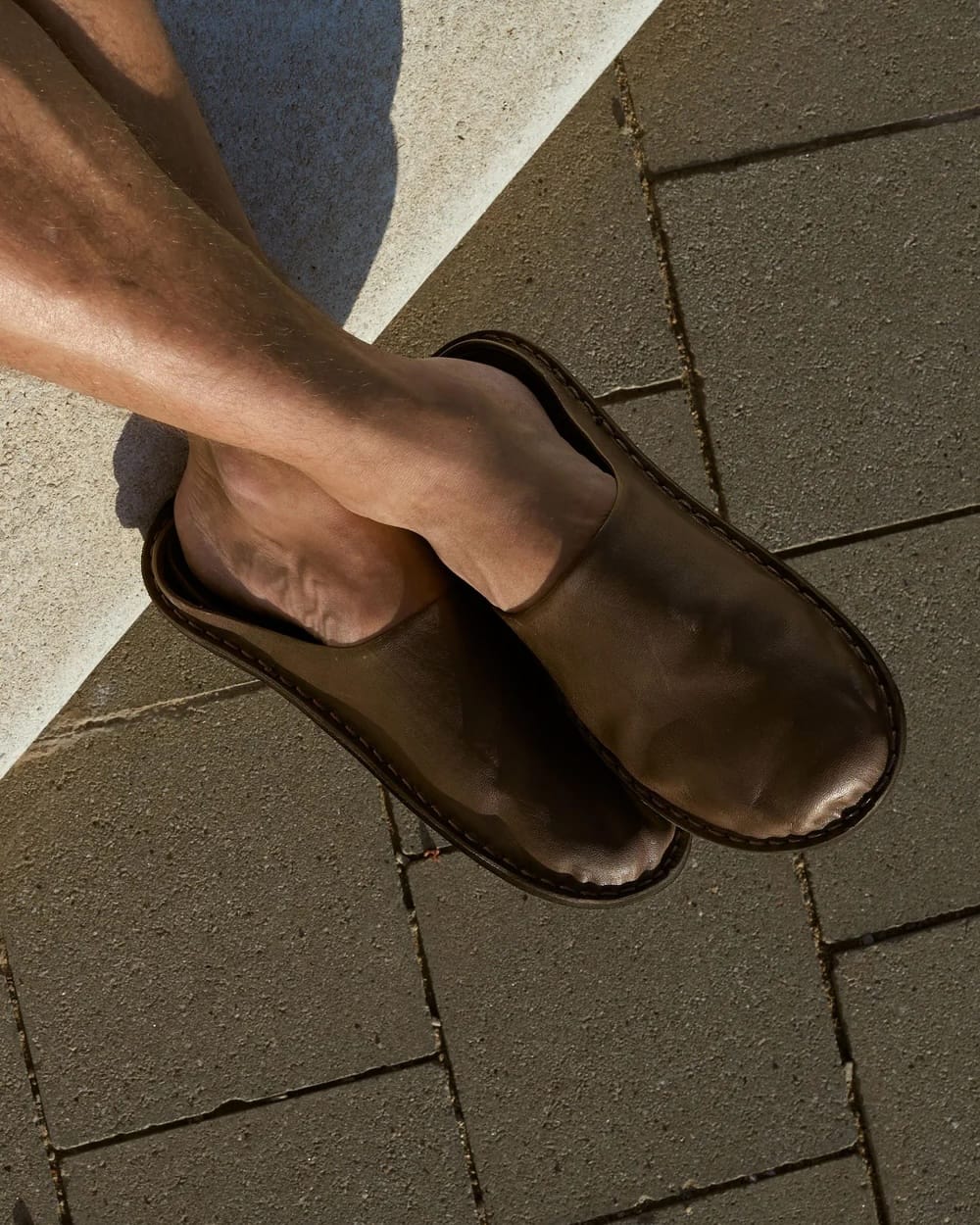
How a back injury, a Finnish camper van, and two founders built VIBAe
They call themselves “shoe dogs,” which in their world is not a metaphor so much as a professional condition. Spend enough years designing shoes and building brands and you start to see the patterns.
“We’re shoe dogs in many ways,” Ludo says, smiling. “We’ve been in the industry for quite a long time.”
Long enough to build and sell a footwear company once already. Long enough to learn that retirement is merely a theory.
A camper van in Finland
The second act started with a phone call from friends in Finland.
The proposal was not complicated. Come over. Spend a couple weeks together. Drive around. Talk. See if anything interesting happens.
“So the four of us jumped in a camper van,” Ludo says. “Tammy, myself, and our partners. We drove around Finland for two weeks. Hot springs. Cold rivers. Brainstorming.”
The trip was less board meeting and more wandering conversation. Long drives through forests. Stops at hot springs. Quick plunges into freezing water that left everyone laughing and wide awake again.
Somewhere during that trip, the idea stopped being hypothetical.
“We got back to Helsinki and everything kind of came together,” Ludo says.
The name arrived early and with a hippy, edgy mood: VIBAe.
Good vibes, yes, but also a philosophy. The small “e” eventually came to represent three principles that shaped the company: ergonomic, ecological, ethically made.
“If we were going to start another brand,” he says, “there had to be a reason for it to exist.”
The injury
That reason started years earlier with a back injury.
In 2009 Ludo herniated a disc badly enough that a surgeon at Cedars-Sinai recommended immediate surgery.
“The doctor looked at the scans and said it was one of the worst herniated discs he’d seen,” Ludo recalls.
He declined.
Instead he started walking. Slowly at first. Often barefoot in the sand.
“The whole thing started with my feet,” he says.
What he noticed during those walks was how naturally the sand supported the body. The foot sinks slightly, weight distributes itself, and pressure disappears in places where most shoes tend to create it.
That observation became the blueprint for the VIBAe footbed.
“It contours your foot the same way sand does when you walk on the beach,” Ludo says. “Your weight gets supported evenly. It feels natural.”
Building shoes the slow way
Comfort alone was not enough to justify a new brand. They wanted to build the company differently too.
“If we were going to do this again,” Ludo says, “we wanted to do it right.”
Production moved to Portugal, where traditional footwear craftsmanship still exists and factories operate at a human scale.
“In the villages where our factory workers live, people grow wine, pears, apples,” he says. “They care about their environment. That matters to us.”
The designs stayed intentionally simple. A handful of silhouettes meant to last longer than a season.
“We make shoes that are classics,” Ludo says. “They don’t go out of fashion.”
Around the table the two of them laugh again, remembering the early days of development. Anyone who has ever tried to build a product from scratch knows the feeling. Sketches. Materials. Prototypes that almost work but not quite.
Startups are rarely glamorous when you are inside them.
Then the world shut down
By early 2020 the designs were finished and the first production run was scheduled.
Then COVID arrived.
Factories closed. Shipping stalled. The entire launch froze before the first pair reached customers.
“We had everything ready,” Tammy says, shaking her head. “Then suddenly the whole world stopped.”
When production resumed months later, the market looked different.
People were working from home. Comfort mattered more than it ever had before. Customers were discovering new brands online instead of wandering through stores.
“People were working from home,” Tammy says. “They needed comfortable shoes.”
Sales started to grow.
The tribe
Something more interesting happened next. A community began forming around the brand.
“Go read the comments on Instagram,” Ludo says, laughing. “There’s a tribe there.”
Customers started buying second pairs. Then third. Sometimes fourth.
“If the product stands up to everything you promise,” he says, “people come back.”
The founders never chased celebrity endorsements or influencer campaigns. The collaborations that followed happened the opposite way.
“I prefer when people love the shoes and come to us,” Ludo says.
One of those admirers turned out to be Comme des Garçons.
“They approached us,” he says, still sounding slightly amused. “We didn’t chase them.”
"People say don’t work with your best friends. That’s bullshit.”
Two founders, one life
There is another unusual piece of this story.
Tammy and Ludo have been together since they were 18. They moved in together three months after meeting and have been building projects together ever since.
“I don’t really know how we do it,” Tammy says, laughing.
They snowboard together. They mountain bike together. They read the same books.
“We do everything together,” she says.
Ludo shrugs.
“You pick your battles,” he says. “You know each other’s strengths and weaknesses.”
Then he adds something most startup advisors would probably disagree with.
“People say don’t work with your best friends,” he says. “That’s bullshit.”
What founders need
Today VIBAe is growing steadily through direct sales and a small network of retailers while building something founders secretly hope for but rarely get.
A tribe.
The founders talk about growth carefully, the way people do after they have seen what large companies can become.
“We know we can grow the brand,” Ludo says. “Twenty million. Forty million.”
Beyond that the conversation changes.
“Do we want to run a three-hundred-million-dollar company?” he asks. “I don’t know. It gets very corporate.”
The comparison he prefers is different.
“We aspire to be the next Birkenstock,” Ludo says, not because of its scale but because of its permanence. “Birkenstock is always there. It never goes away.”
Ask them what entrepreneurs need most and neither of them mentions venture capital.
“You need patience,” Ludo says. “It doesn’t happen overnight.”
Tammy thinks about it for a moment before answering.
“You have to be made of steel,” she says, smiling. “And flexible like bamboo.”
Building a company from scratch still means doing everything in the early years.
“You sweep the floor. You help customers try on shoes. You pack boxes,” Ludo says.
Titles do not matter much when you are building something from nothing and doing every job yourself.
“Don’t think you’re too great,” he says. “At the end of the day, it all starts with your feet.”
Vibae is more the artisan footwear. It's a whole mood. Much like the founders.
Comments ()