The Sparrow in the Razor Wire
Inside prison he devoured books on entrepreneurship, spirituality, mindfulness, and personal development. One idea kept circling in his mind. What if prison was not the end of his life? “I asked myself why do I have to view prison as punishment. Why can’t this be a place where I remake myself.”
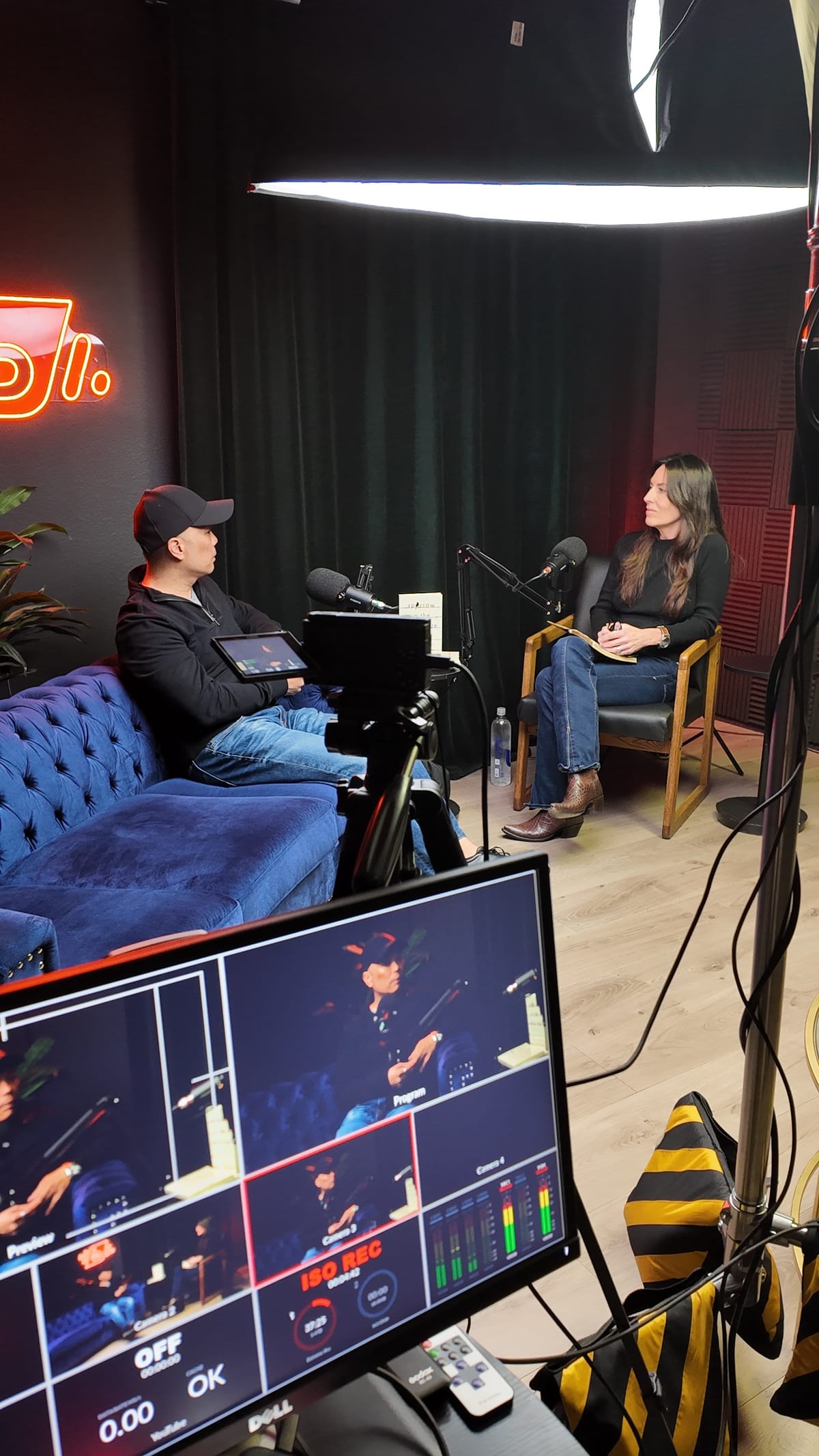
Quan Huynh found freedom in prison and built a second life helping others do the same
When I sat down to interview Quan Huynh, I realized something almost immediately. He was the first convicted murderer I had ever interviewed.
“I committed a murder. That does not define me. I’m no longer that same person.”
I have interviewed startup founders, investors, musicians, chefs, athletes, and tech bros. But never someone who had killed a man.
Huynh did not try to soften the truth. I think he sensed my awkwardness, so his bluntness was the conversation starter to end all conversation starters.
“I shot and killed a man,” he said.
What followed over the next hour was one of the most unusual entrepreneurial stories I have ever heard. A story about gang culture, rage, prison yards, philosophy, grief, and the strange way a human life can pivot when a person decides to look at themselves and really, truly see who they are.
Huynh recalls that moment – a moment he discovered standing in a prison yard.
“I could see the dew on the blades of grass,” he told me. “And I heard a sparrow chirp in the razor wire.”
Quan Huynh’s story begins with displacement. His family fled Vietnam after the fall of Saigon. His father had served in the South Vietnamese military and trained with U.S. forces. Eventually the family landed somewhere unexpected. Utah.
“I think we were probably the first Vietnamese family to live in Utah at the time.”
Provo in the 1980s was not exactly a hotbed of diversity. Huynh remembers it as beautiful and “friendly in many ways.” But also isolating for a refugee kid trying to understand who he was.
“I remember asking myself what’s wrong with me. What’s wrong with our family. Why don’t I fit in.”
The feeling followed him when the family moved to California after his father was diagnosed with leukemia.
Even among other Vietnamese kids he still felt like an outsider. “Even the other Vietnamese kids teased me because I couldn’t speak Vietnamese that well.”
And then, Huynh recalls the moment everything changed. “My father passed away when I was 13, and I was first arrested within four years.”
Juvenile detention became the first step into California’s prison pipeline. Inside the system, identity is not optional. Race and gang affiliation quickly define survival.
“Those were the guys I looked up to and began to emulate,” he said. “I found a group that accepts me and a group I can identify with.”
For a kid who had never felt like he belonged anywhere, that acceptance was powerful.
The spiral accelerated through gang activity, gun violations, and prison culture until a night in 1999 outside a club in Hollywood. Huynh had brought a gun.
“I shot and killed a man and injured three others in the car with him,” he said.
He was convicted of second degree murder and sentenced to 15 years to life in the California prison system.
At the time that sentence was widely understood as permanent. “There had not been a single life term prisoner paroled in California since 1977.”
“One thing that always gave me escape, even as a little boy, was I always loved to read.”
For years inside prison, Huynh continued living inside the same gang structures and survival patterns that shaped his life outside.
But one habit remained a constant. Reading.
“One thing that always gave me escape, even as a little boy, was I always loved to read.”
Inside prison he devoured books on entrepreneurship, spirituality, mindfulness, and personal development. One idea kept circling in his mind. What if prison was not the end of his life?
“I asked myself why do I have to view prison as punishment. Why can’t this be a place where I remake myself.”
The shift happened on a prison yard one morning.
“I remember standing by the fence when the sun was just coming up. I could see the dew on the blades of grass,” he said. “And I heard a sparrow chirp in the razor wire.”
That moment became the title of his book, Sparrow in the Razor Wire. It also became the turning point in his life.
Huynh began doing the work he had avoided for decades. He sought therapy to process the death of his father. He began studying grief and loss.
He noticed something else. It seemed every man around him was carrying grief too.
“I remember putting together a syllabus and submitting it to prison psychologists saying can we start a grief and loss group.”
The program became the first of its kind in that prison. For Huynh, the experience created a realization that surprised even him.
He was incarcerated, forgotten by the outside world. Yet for the first time he felt something he had never felt before. Purpose.
“We’re all discarded, but I am doing meaningful stuff and I am alive and I am absolutely free.”
Years later Huynh walked into his parole hearing where his attorney had one piece of advice. “Do not confess.”
Huynh ignored it. “I want to come clean. I want to show up in the world now.”
For years he had denied being the shooter, but that day, in that room he told the truth.
“I committed a murder. That does not define me. I’m no longer that same person.”
In 2015 he heard the words that changed his life again. “Suitable for parole.”
“When I heard them say I was suitable I thought oh my God they’re letting me go.”
Today Huynh is the Executive Director of Defy Ventures Southern California, a nonprofit that works inside prisons helping incarcerated people rebuild their lives through entrepreneurship and personal development. The goal iof the program is not simply starting businesses, it is changing mindsets and perceptions.
“The purpose is to instill the entrepreneurial mindset. To be okay with failure. To learn grit, resiliency, and pivoting.”
Many of the people entering the program already understand hustle. They just learned it on the wrong side of the law.
“A lot of them already have these transferable skills that they channeled into illegal ventures,” he explained. “They’re hustlers. They chose wrong decisions in their hustling, but the skill set is still there.”
Inside prison walls, the programs also shift the culture and provide something most inmates never experience. Hope.
“Once we get into a prison yard and start graduating a couple cohorts it changes the fabric of that prison culture.”
California’s three-year recidivism rate sits around 67 percent. For Defy graduates it is under 15 percent.
Huynh remembers one man who had spent decades in solitary confinement. After finishing the program, he stood in front of the group and said something Huynh has never forgotten.
“Even if I die in here now, I know how to die with dignity.”
Toward the end of our conversation the focus shifts back to Huynh himself. After everything he has experienced, I asked, how does he think about his future?
“Every decision I’ve made since that moment has come from my gut intuition. If it feels aligned with how I want to impact the world I go there.”
And what would he say to someone who feels trapped, hopeless, or unable to see a way forward?
Huynh does not offer a formula, not outright anyway. “I don’t know how to prescribe it for everyone. It takes work. That inner voice has to be cultivated.”

Comments ()