Economic systems are consolidating. Big platforms dominate markets. Universities are wrestling with their own transformations. Technology is accelerating the pace of change, as it always does.
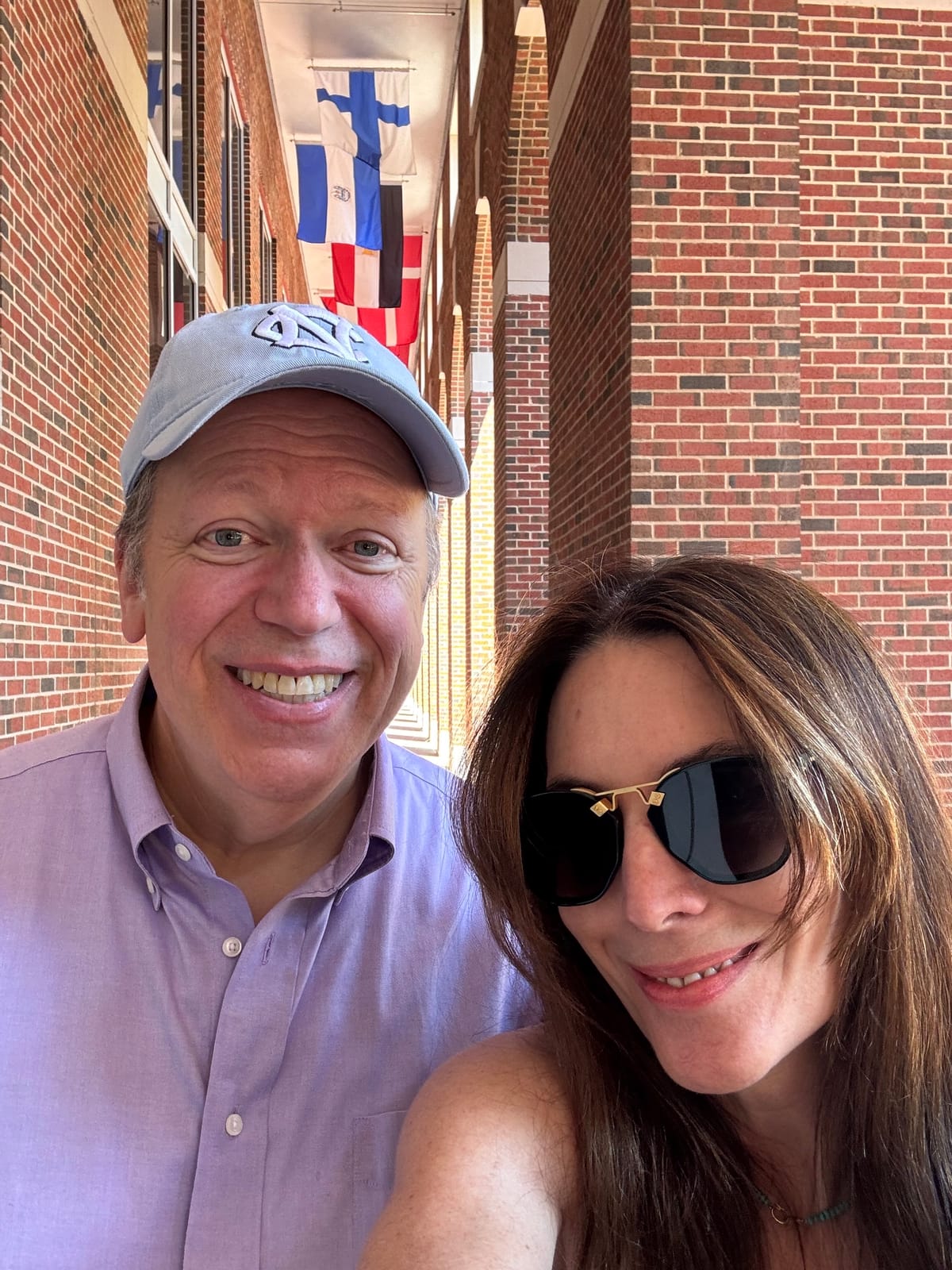
Ted Zoller has spent decades teaching entrepreneurship at UNC, Chapel Hill. His view of the future is not panicked. It is urgent, open-eyed, and stubbornly hopeful.
Ted Zoller is not blind to the moment we are living in. He doesn't live under a rock, folks. He sees the same turbulence everyone else sees. Political polarization and cultural fragmentation. Hell, he’s in it. He sees first hand, how institutions are struggling to keep up with the pace of technological change. AI redrawing the boundaries of work and knowledge faster than most systems can absorb.
The world, as he puts it plainly, is rocky.
“The state of the world is rocky. It’s all about change.”
For many people, that instability breeds anxiety. For Ted, it signals something else entirely. It signals the conditions where entrepreneurship does its best work.
“I’m excited about the future because we certainly see nothing but crisis and change at the moment. Entrepreneurship will thrive as a result.”
That optimism is not blind faith. Ted has spent decades studying founders, teaching them, watching them stumble and build and stumble again. What he has learned is that entrepreneurs do not wait for calm conditions. They thrive in the chaos. That where opportunity hoovers.
“Whenever there’s a huge crisis, entrepreneurs are the first ones into the breach,” he says.
While large institutions stabilize and protect the status quo, entrepreneurs explore and push the edges.
“Entrepreneurs live in the corners. They live in the creases. They live in the undefined.”
In Ted’s view, that is why the future belongs to them. Not because they are louder, richer, or more celebrated, but because they are comfortable working inside uncertainty. They ask questions others avoid. They challenge rules others accept. They build where others hesitate.
It is also why he still believes so deeply in the promise of the American experiment.
“The American dream is about giving yourself unabashed freedom to do the impossible.”
That freedom, he admits, is under pressure. Economic systems are consolidating. Big platforms dominate markets. Universities are wrestling with their own transformations. Technology is accelerating the pace of change, as it always does.
But Ted believes the deeper forces that drive entrepreneurship are older and harder to extinguish than any economic cycle.
“Entrepreneurs are called. They give themselves permission. No one is going to give them permission. They’re going to take it.”
What he sees in his students reinforces that belief. This generation has grown up through shocks that earlier generations rarely faced all at once. Financial crises. Pandemic disruption. Political upheaval. Technological acceleration.
Instead of retreating, many of them are adapting.
“They’ve been through multiple shocks in their lives. As a result, they’re resilient. They’re highly creative. And they’re going to make change.”
Ted believes the real challenge ahead is not technology or markets. It is whether society continues to leave room for the people willing to build something new.
“Bigness is the enemy of entrepreneurship. Too much consolidation. Too many rigid systems. Too little white space where experimentation can happen. When the white space disappears, creativity suffocates.” He’s emphatic on this point.
But Ted is betting that the white space will survive. That the instinct to question, experiment, and build is simply too deeply wired into human nature to disappear.
“The genie’s out of the bottle. Entrepreneurship is here to stay. And that's a good thing because we need it.”
A short documentary featuring the students, faculty, and staff at UNC Chapel Hill on what worries them and what the future holds for entrepreneurs.
Comments ()