Now go away or I shall taunt you a second time
We’ve reached the point where we’re training AI to imitate human editing so we can prove a human edited it. I was there. This is my story.
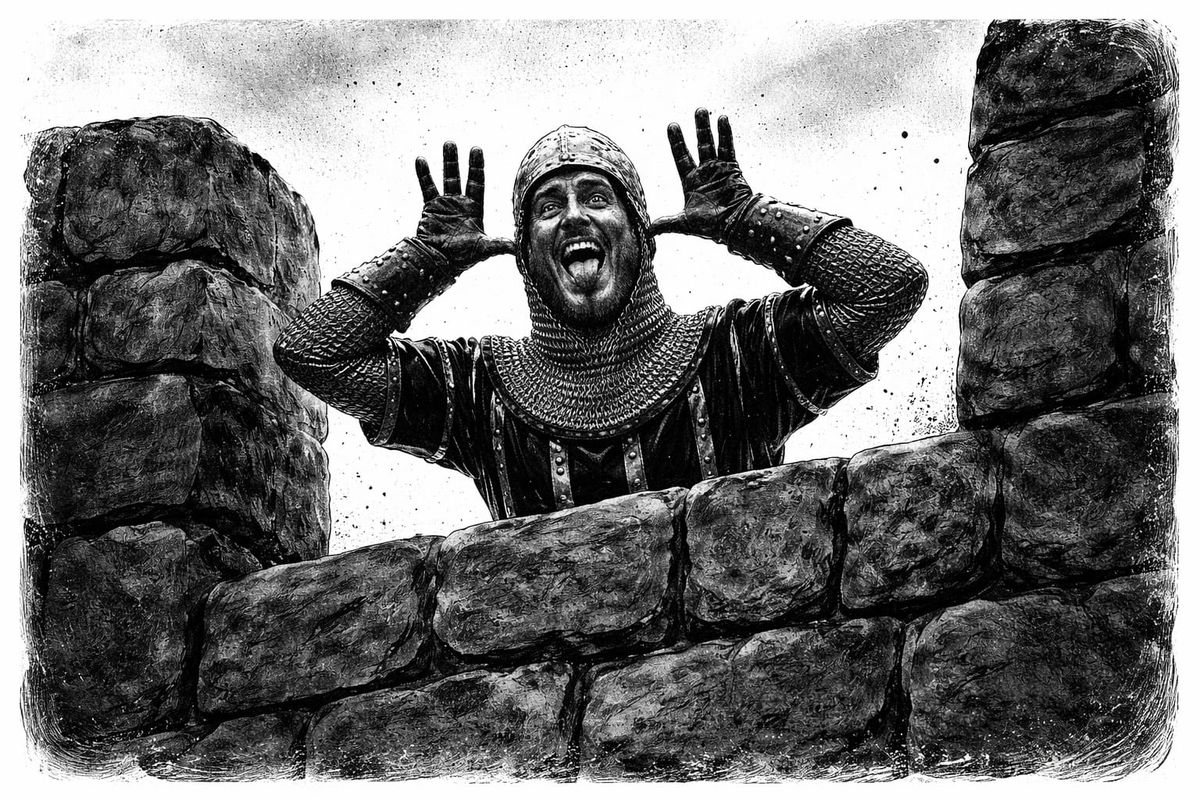
“Hey, Google says we need to rerun these pages and add a ‘human editing’ touch to restore the originality of the original from its point of origin BEFORE we ran it through AI for optimization. We must have proof of human editing! Then we will build it into the AI! Now go away, you empty-headed word person. Re-edit these AI edits the way it was originally edited.”
WTF, mate? Seems a bit circular if you ask me. But this is happening right now. These are real conversations. The “word people” sent away and tasked with teaching the machine how to edit like a human, so Google thinks a human edited it. Heh. I don’t know what Monty Python skit we’re in, but it seems we’re nearing Vestibule of the Futile. Ok, maybe that was Dante, but still this is absurd.
It's not AI's fault. It's more like operator error. AI is great at so many things. Almost everything, if we're being honest. It’s a wizard capable of near mythical productivity hacks. You can build anything with it. You can make a Claude dashboard for any occasion in mere seconds. You can generate scads of pages and images. But what it is not yet capable of, and pardon the sappy sound of this, is heart and soul – both features of human consciousness. That's a challenging prompt to give an AI.
When you take thousands of pages of content, run those pages through a machine so other machines will favor it, prompt it with exquisite instructions and specify brand guidelines and then tell it all the sourcing and citations, you end up with exactly that – a solid wall of words and citations that conform to brand guidelines. It is technically accurate. There is nothing factually wrong with it. It's precisely what you requested. But it reads like a machine because it is. It is functional, sturdy, shiny, and lacking any warmth whatsoever. It's like furniture from the 1980s.
That’s probably why Google is now using an algorithm to measure and benchmark the "human editing" qualities of a page. That sentence just exceeded any irony we have left.
Words do not a story make. Stories are human. Stories require editorial judgement. A purpose. A mission. Sourcing. A conversation with an audience. Because without a human touch, a page is just a page.
Judgement is not a layer you can just slap on after the fact. It is the thing itself. It is the conscious action shaping the work before it ever reaches the page. Strip it out and the story becomes what the machine decides – soulless, steely, precise. A knife to the heart.
Quick reminder: Just because you can, doesn’t mean you should. -AC

Comments ()